

Table of Contents
- How We Evaluated Generative AI Brand Messaging Tools
- Generative AI Marketing Tools: Ratings and Pros/Cons
- AI Content Creation Best Practices for Brand Voice Consistency
- Risks of AI in Brand Messaging: Trademark, Trust, and Voice Drift
- AI-Specific Brand Guidelines: The Missing Layer Most Teams Skip
- Long-Term SEO Impact of AI-Generated Messaging
- The Verdict: Is Generative AI Good for Brand Messaging?
- Frequently Asked Questions
Last Updated: September 14, 2026
How We Evaluated Generative AI Brand Messaging Tools
The short answer to whether generative AI is good for brand messaging: it depends entirely on the guardrails you build around it. This review from My Chief Marketing Officer evaluates four leading platforms against the criteria that actually matter for brand consistency, legal exposure, and long-term search performance. We scored each tool on brand voice control, workflow automation, personalization capability, and how well it supports human-in-the-loop review. The tension between content scaling and message consistency defines this entire category, and most buyers underestimate it until their messaging has already drifted.
Generative AI Marketing Tools: Ratings and Pros/Cons
Generative AI marketing tools fall into two camps: dedicated brand-voice platforms and general-purpose models you configure yourself. The dedicated platforms cost more but ship with guardrails. The general models are cheaper and more flexible but demand prompt engineering discipline. Here is how the four most common options compare.

| Tool | Free Tier | Starting Price | Best For | Standout Feature |
|---|---|---|---|---|
| Jasper | No | $39/month | Marketing teams with strict brand guidelines | Brand Voice training |
| ChatGPT | Yes | $20/month | Flexible brainstorming and drafting | Custom GPTs |
| Claude | Yes | $20/month | Long-form content with complex constraints | Large context window |
| Gemini | Yes | $20/month | Teams inside Google Workspace | Workspace integration |
Jasper
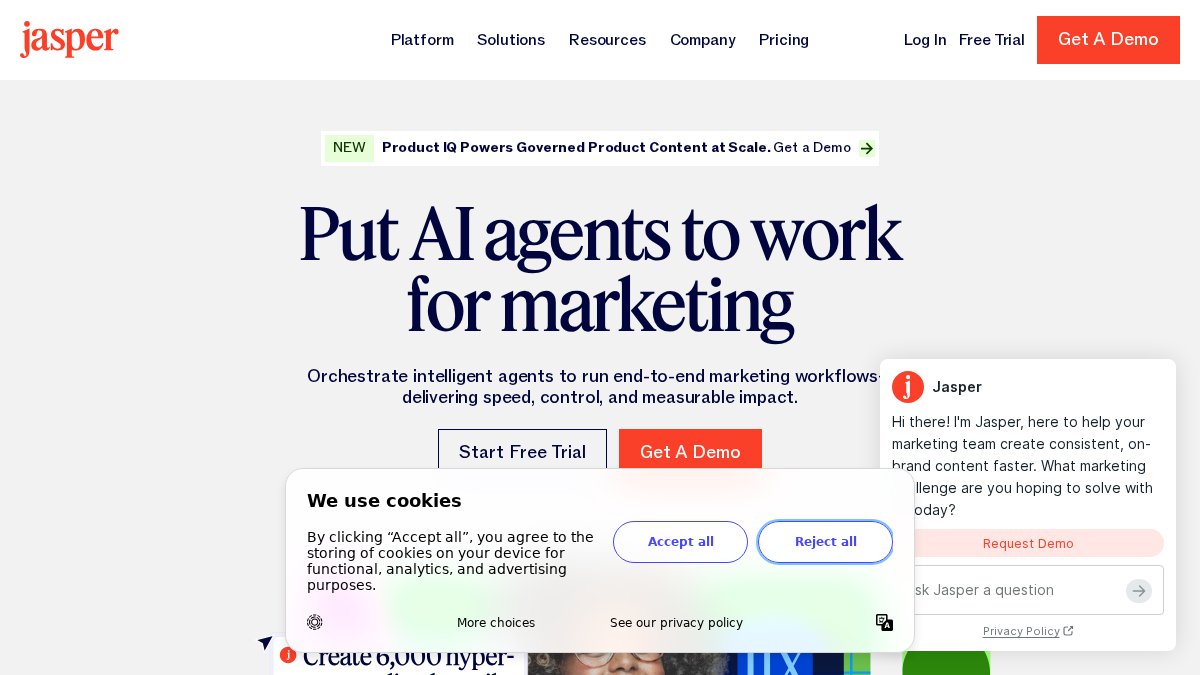
Jasper trains on your existing creative assets to enforce tone and style across channels. The Brand Voice feature is the closest thing to automated message consistency in this category. The tradeoff is real: you pay a premium over general-purpose models, and the template library, while extensive, can push output toward formulaic patterns if you lean on it too heavily.
ChatGPT (OpenAI)
ChatGPT is the most versatile option here. Custom GPTs let you encode brand rules once and reuse them, and the data analysis features help interpret campaign performance. What most guides miss is that ChatGPT’s default output skews generic. Without deliberate prompt engineering, your brand identity quietly flattens into competent but forgettable copy.
Claude (Anthropic)
Claude’s large context window means you can load an entire brand style guide in one session and hold those constraints across a long document. For long-form messaging where nuance matters, it produces the most human-sounding drafts of the four. Where it falls short: no native marketing templates, so you build your own workflows from scratch.
Gemini (Google)
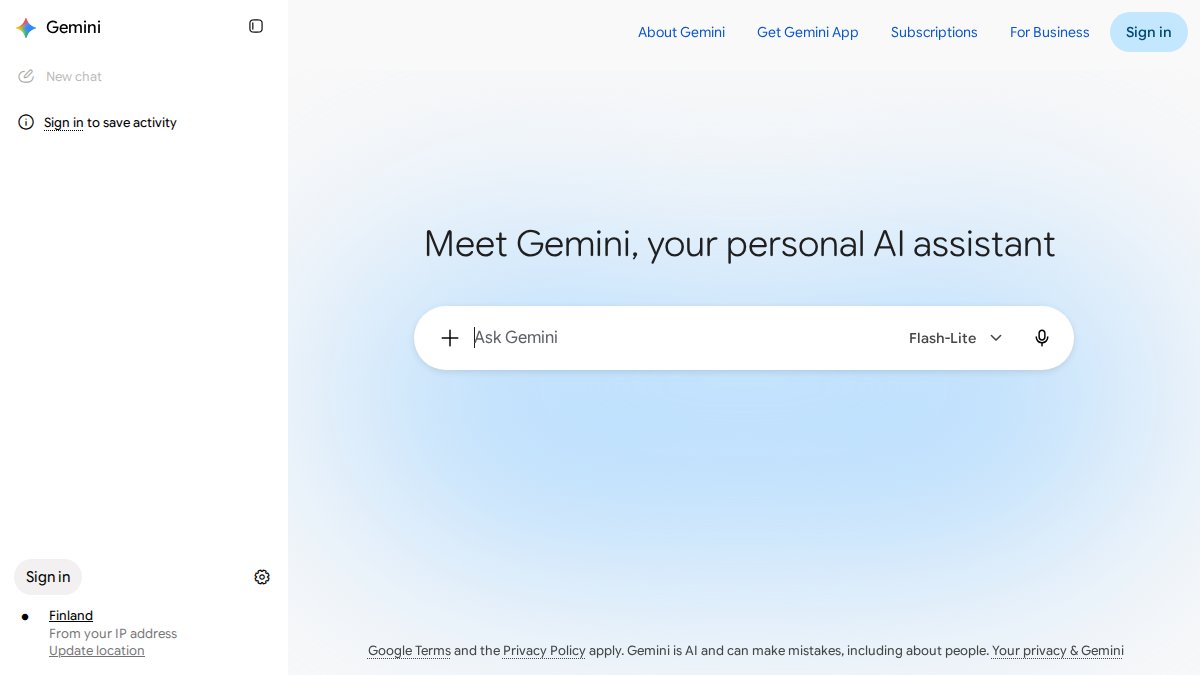
Gemini’s advantage is proximity. If your team already lives in Google Workspace, content creation happens inside the tools you already use, with real-time search access for current market context. The drawback is creative caution. Gemini tends to hedge on edgier brand voices, which frustrates teams with a distinct personality.
AI Content Creation Best Practices for Brand Voice Consistency
AI content creation best practices start with a written voice specification the model can actually follow. Vague guidance like “sound professional” produces drift; specific rules about sentence length, vocabulary, and prohibited phrases produce consistency. Feed the model real examples of approved messaging, then require every output to pass a human review before publishing. This human-in-the-loop step is not optional for regulated industries or high-stakes campaigns. The FTC’s guidance on advertising and endorsements makes clear that the advertiser remains responsible for claims, regardless of who or what drafted them.
Version-control your brand voice prompts the same way you version code. When messaging shifts, update the prompt and note the date. Teams that skip this end up with three different “official” brand voices across departments.
Risks of AI in Brand Messaging: Trademark, Trust, and Voice Drift
The risks of AI in brand messaging divide into three categories: legal, reputational, and structural. Each one has a different failure mode, a different timeline, and a different fix. Treating them as a single “AI risk” bucket is why most teams under-prepare.
Legal exposure: trademark, claims, and right of publicity
Generative models are trained on the open web, which means they have absorbed competitor taglines, registered slogans, and celebrity phrasing. When a model produces a tagline, it is not checking the trademark register. Under the Lanham Act, using a mark that is likely to cause confusion in commerce exposes the advertiser, not the model vendor, to liability. The USPTO trademark search database is the first stop before publishing any AI-generated tagline or campaign name, and a full clearance search through counsel is the second.
Claims are the second legal trap. The FTC’s guidance on advertising and endorsements makes clear the advertiser is responsible for substantiating every claim, regardless of whether a human or a model drafted it. A hallucinated specification, a battery life, a percentage improvement, a certification the product does not hold, is an advertising compliance problem, not an editing mistake. The FTC’s substantiation doctrine requires a reasonable basis before the claim runs, not after.
Right of publicity is the third and least-discussed exposure. Models can generate copy that implies an endorsement by a real person, and using a name or likeness for commercial purposes without permission is actionable under state right-of-publicity laws. This is why AI-generated testimonial-style copy should never ship without a signed release from the named individual.
Reputational risk: the authenticity signal
Consumers are not measuring authenticity in the abstract. They are responding to specificity, point of view, and evidence. Synthetic messaging that reads as generic erodes response rates over time because it fails to give the reader a reason to believe the brand knows something they do not. The reputational damage is cumulative, not immediate, which is exactly why it gets missed in quarterly reporting.
Structural risk: voice drift
Voice drift is the slow divergence between what a brand says and what it meant to say. It compounds across channels and contributors. A team running four AI tools across six channels without a shared voice specification will produce four subtly different brands within a quarter. The fix is not better prompting alone, it is a versioned voice specification, a review checkpoint, and a periodic audit that scores published copy against the specification.
Never publish AI-generated claims about product performance without verification. A hallucinated specification is a regulatory problem, not just an editing mistake, and it can trigger advertising compliance issues that cost far more than the content saved. The same applies to AI-generated testimonials and endorsements, the FTC holds the advertiser liable for the substance of the claim, not the tool that wrote it.
AI-Specific Brand Guidelines: The Missing Layer Most Teams Skip
Most brand guidelines were written for humans and say nothing about AI. That is the gap. An AI-specific guideline layer covers four things: approved prompts and their versions, prohibited vocabulary and claims, required human review checkpoints, and disclosure rules for synthetic content. This layer is what separates teams that scale content safely from teams that discover a messaging problem after it publishes. For teams without a marketing executive to build that process, a fractional CMO can install the guardrails before scaling begins.
Schedule Your FREE Session Today! →
Long-Term SEO Impact of AI-Generated Messaging
Long-term SEO impact is the angle competitors miss entirely, and it is the one that shows up on a P&L two to four quarters after launch. The mechanism is not a penalty. It is convergence.
Why AI-generated messaging decays in search
Search engines rank pages that demonstrate first-hand experience, original analysis, and information gain, the delta between what a page says and what every other page on the topic already says. Mass-produced synthetic messaging tends to collapse toward the statistical center of its training data. That means thousands of pages converge on the same phrasing, the same structure, and the same claims. When every page says the same thing, none of them has information gain, and the ranking system has no reason to prefer one over another.
The Google Search Central documentation on helpful content is explicit that people-first, original material is what earns visibility. The practical translation: AI is a drafting accelerant, not a differentiation strategy. If the strategic insight, the proprietary data, or the first-hand experience is missing, the page has nothing to rank on.
The generative search compounding problem
Generative search platforms pull from content that adds something new. They synthesize across sources, which means a page that only restates consensus contributes nothing to the synthesis and gets cited less often. Over time, brands that publish templated AI output at scale see their citation share in generative results decline even as their published volume rises. The volume metric looks healthy; the visibility metric does not.
A measurable framework: the information-gain audit
Most teams cannot tell whether their AI-assisted content is decaying until traffic drops. A quarterly information-gain audit closes that gap. The audit scores each published page on four signals: (1) does it contain a claim, number, or example that does not appear in the top-ranking pages for its target query; (2) does it name a specific mechanism rather than a general benefit; (3) does it include first-hand evidence, a test, a client result, a documented process; (4) does it take a defensible position rather than hedging. Pages that score zero on all four are candidates for rewrite or consolidation, not for more AI volume.
The operational implication
Use AI for drafting speed, structural editing, and variant generation. Do not use it for the strategic insight, the proprietary data, or the point of view that makes a page worth ranking. The teams that hold that line treat AI as a force multiplier on top of a real content strategy. The teams that do not end up with a large library of pages that all sound the same and none of which rank.
Run the information-gain audit on your ten highest-traffic pages first. If those pages survive the audit, your AI workflow is probably safe to scale. If they do not, scaling will accelerate the decay.
The Verdict: Is Generative AI Good for Brand Messaging?
Is generative AI good for brand messaging? Yes, with conditions. It is genuinely good when paired with an AI-specific brand guideline layer, a trained voice model, and mandatory human review. It is actively harmful when teams use it to replace strategic judgment with volume. The tools themselves are not the variable. Your process is. For teams without a marketing executive to build that process, a fractional CMO can install the guardrails before scaling begins.
The tools are ready. Most teams are not. Budget for the guideline layer and the review workflow before you budget for the subscription.
Scaling brand messaging with AI without losing your voice is the real challenge, and most teams underestimate the process work it requires. My Chief Marketing Officer pairs experienced Fractional CMOs with the proprietary M.A.R.S. Method of Engagement & Execution to consolidate fragmented marketing into a unified lead-generation ecosystem, with direct access to project and strategy directors. You get the strategic oversight to build AI guardrails properly, without the cost of a full-time executive salary and benefits. Schedule your free session today and find out what your messaging could do with the right structure behind it.
Frequently Asked Questions
What are the risks of using generative AI for brand messaging?
The biggest risks are brand voice drift, trademark and copyright exposure, and consumer trust erosion when audiences detect synthetic content. AI models can also hallucinate product claims or use competitor phrasing, creating legal and reputational exposure. Trademark clearance and human-in-the-loop review are essential safeguards before any AI-generated messaging goes live. Without AI-specific brand guidelines, teams often see message consistency slip within weeks of scaling content production.
How does generative AI impact brand voice consistency?
It depends on how you deploy it. Generic prompts produce generic output, which flattens brand voice fast. Tools like Jasper train on your brand voice, while Claude and ChatGPT require detailed style guides and examples in every prompt. The practical fix is a documented brand voice framework with sample messaging, banned phrases, and tone rules that you paste into every AI workflow. Teams that skip this step report noticeable voice drift within the first month of scaling.
Which generative AI marketing tools are best for brand messaging?
Jasper ($39/month) is built for marketing teams that need brand voice training and campaign templates. ChatGPT ($20/month) offers the most flexibility for brainstorming and drafting. Claude ($20/month) handles long-form content and complex brand constraints well thanks to its large context window. Gemini ($20/month) integrates with Google Workspace and pulls real-time search data. Most teams combine two: one for drafting, one for research or editing.
Can generative AI maintain a unique brand identity?
Yes, but only with structured inputs. AI has no memory of your brand unless you feed it your voice, values, and audience. That means building AI-specific brand guidelines: tone rules, approved phrases, forbidden words, and example content for every channel. Claude and Jasper handle this best because they can process long style guides. Human review remains the final filter, especially for campaign launches, legal claims, and anything customer-facing.
What are the legal considerations for AI-generated marketing content?
The main issues are copyright, trademark, and disclosure. AI-generated content may reproduce protected material without attribution, so trademark clearance searches and originality checks matter before publishing. The FTC has signaled that deceptive AI-generated claims or fake endorsements can violate advertising rules. Keep records of your prompts and human edits, and make sure any AI-assisted testimonial or product claim is factually verified before it reaches customers.


